


When choosing the right engine for a studio, the decision is about more than features on a checklist. It is about workflow, freedom, long-term sustainability, and how well the engine fits the kind of games you want to build. For us, Godot stands out because it gives us the right balance of power, flexibility, and efficiency.
Godot is a free and open-source game engine released under the MIT license, which means developers can use it for commercial work without royalties or restrictive licensing terms. That freedom matters. It allows us to focus on building games and experiences without worrying about revenue cuts, locked ecosystems, or complicated licensing changes later on.
Another major reason we use Godot is its flexibility. Godot supports both 2D and 3D development, making it a strong choice for studios that want room to experiment and grow. Whether we are prototyping a gameplay idea, building a polished 2D experience, or developing a more advanced 3D project, Godot gives us a consistent environment to work in. The official Godot site describes the engine as suitable for 2D, 3D, cross-platform, and even XR projects.
We also value Godot’s workflow. Its node-based structure makes projects easier to organize and helps development stay clean and modular. That means we can build game systems in a way that is easier to maintain, test, and expand over time. For an independent studio or a growing team, that kind of clarity is important because it helps reduce unnecessary complexity as projects evolve. Godot’s scripting ecosystem also supports both GDScript and C#, giving developers a choice depending on the needs of the project. GDScript is designed specifically for Godot and is tightly integrated with the engine, while C# support is available for teams that prefer that workflow.
Cross-platform development is another key reason behind our choice. Godot supports exporting projects across multiple platforms, which helps us build with flexibility in mind from the start rather than treating ports as an afterthought. That is especially important in today’s market, where players expect games and interactive experiences to reach them across desktop, mobile, and web environments.
We also like where Godot is heading. As of March 2026, the current stable line is 4.6.1, and the official project describes the 4.6 cycle as entering a phase focused on polish, quality-of-life improvements, and performance optimization. That is encouraging for studios like ours because it shows the engine is not just growing in features, but also maturing in stability and usability.
Just as importantly, Godot aligns with how we like to build. We prefer tools that are efficient, developer-friendly, and not weighed down by unnecessary barriers. Godot gives us control, supports fast iteration, and fits the mindset of a modern studio that wants to create great work without being boxed in by the engine itself.
That is why we use Godot as our game engine. It is not simply because it is open source, or because it is popular, or because it is affordable. We use it because it helps us build the way we want to build: creatively, efficiently, and with full control over our process.
If you are looking for a studio that combines creative ideas with efficient development tools, Khimaira Studios is building with exactly that in mind.
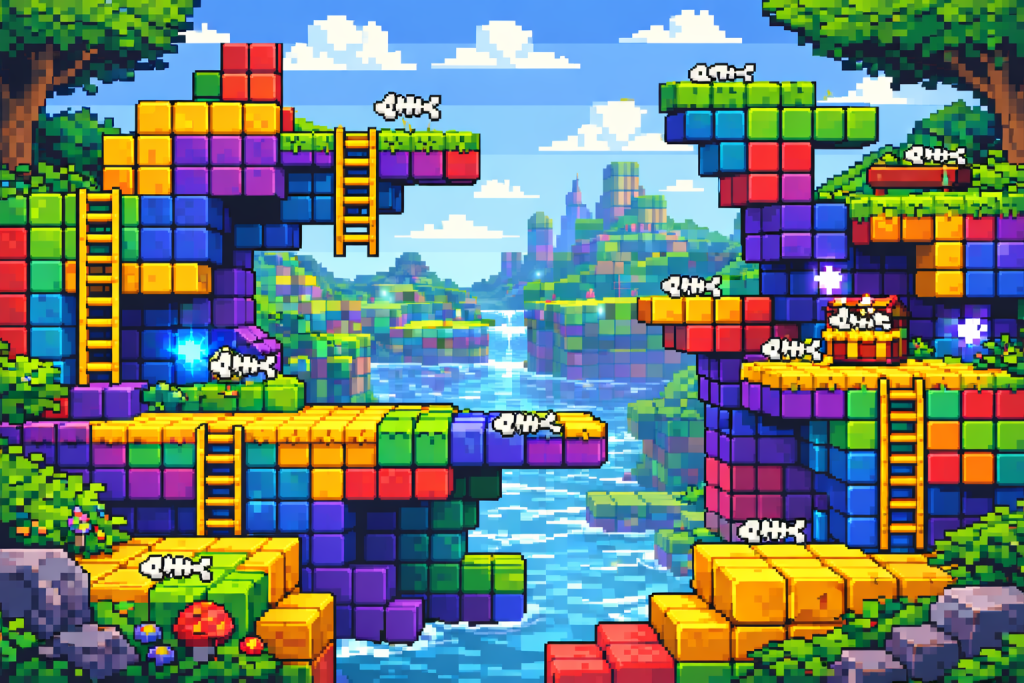
Inspirational image of a world on one of our upcoming games