


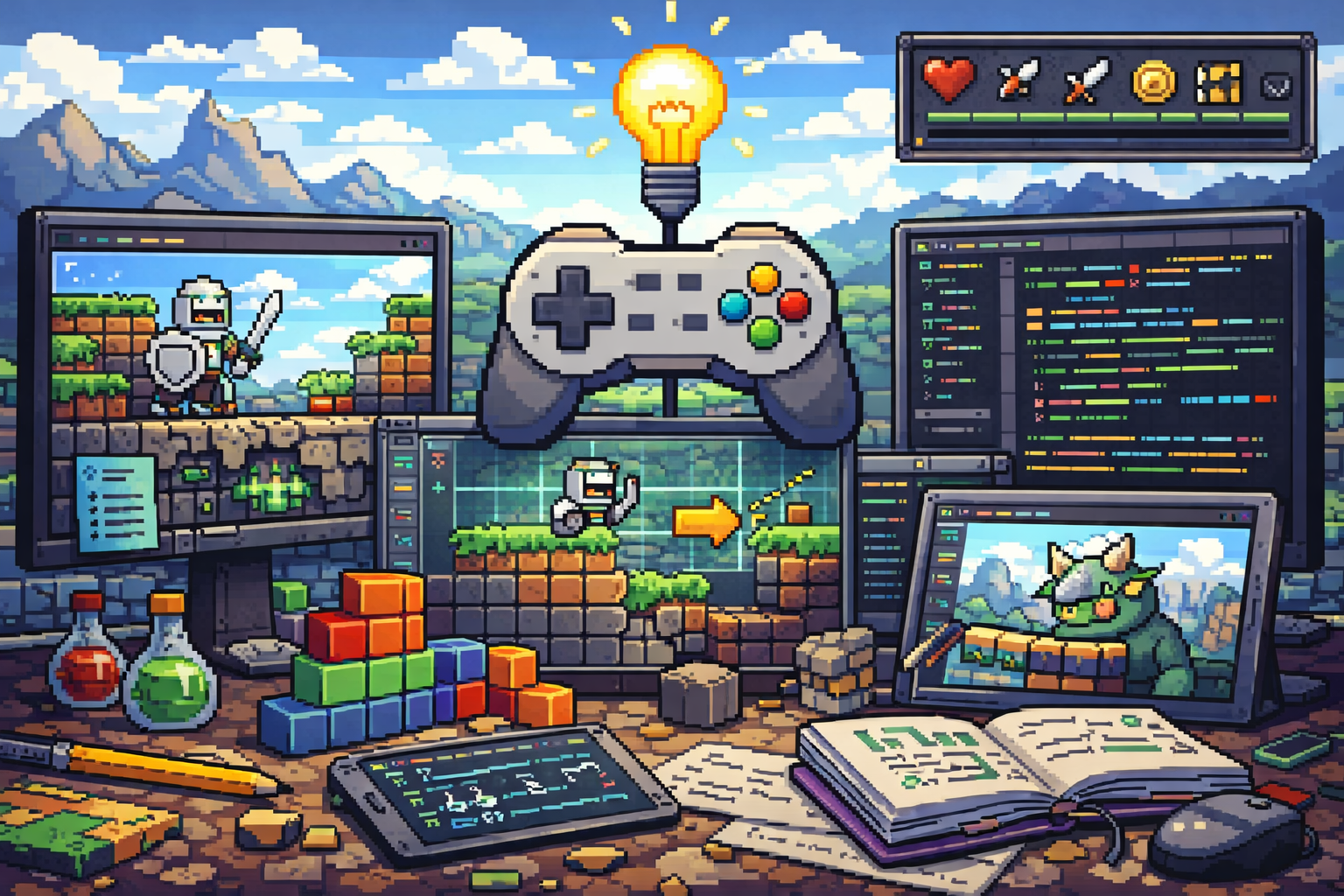
Game development is where creativity meets problem-solving. It is the process of taking an idea, shaping it into a concept, and building it into something players can interact with, enjoy, and remember. From the outside, games can look like pure entertainment, but behind every finished title is a detailed process that combines design, technology, art, sound, and constant iteration.
At its core, game development starts with a simple question: what kind of experience do we want the player to have? That question drives everything that follows. Whether the goal is fast-paced action, strategic challenge, exploration, storytelling, or puzzle-solving, the early stages of development focus on defining the gameplay, the world, and the overall feel of the game. Strong game ideas are not just about visuals or features. They are about creating a clear and engaging player experience.
Once the concept is in place, the development process begins to take shape. Game design lays out the mechanics, progression, rules, and structure. Art direction defines the visual identity, from characters and environments to user interface and atmosphere. Programming brings the systems to life, making movement, interactions, menus, enemies, physics, and logic all work together. Sound and music add emotion, feedback, and energy. Each part supports the others, and the quality of a game often comes from how well these elements are connected.
One of the most important parts of game development is prototyping. Before building out a full game, developers often create smaller playable versions of key ideas to test whether they are actually fun. A mechanic that sounds exciting on paper may feel confusing or repetitive once it is in motion. Prototypes help teams explore ideas quickly, make decisions earlier, and avoid wasting time on features that do not improve the final experience. This stage is where experimentation matters most.
Game development also requires constant iteration. Very few parts of a game are perfect the first time. Levels are refined, controls are adjusted, enemy behaviour is reworked, art is improved, and pacing is reshaped based on testing and feedback. This cycle of building, testing, learning, and improving is what helps transform a rough concept into a polished product. The best games are usually the result of many small improvements made over time.
Another key part of development is choosing the right tools and workflow. The engine, asset pipeline, planning systems, and communication process all affect how efficiently a team can build. A good development setup allows faster iteration, better organisation, and more freedom to experiment. For smaller studios especially, the right workflow can make a huge difference in both quality and speed.
Game development is not only about building something that works. It is about building something that feels right. A jump needs to feel responsive. A menu needs to feel intuitive. Combat needs to feel satisfying. Exploration needs to feel rewarding. Small details often have the biggest impact on how players experience a game. That is why good development is not just technical. It is creative, thoughtful, and player-focused.
For a studio like ours, game development is about turning ideas into meaningful digital experiences. We are interested in games that are visually engaging, technically solid, and enjoyable to play. That means thinking carefully about every stage of the process, from concept and planning to execution and polish. Great games are not created by accident. They are built through vision, skill, testing, and a willingness to keep improving.
As technology continues to evolve, game development keeps opening new opportunities for studios of all sizes. Independent teams can now build ambitious experiences, experiment with unique mechanics, and bring original ideas to life in ways that were once only possible for much larger companies. What matters most is not the size of the team, but the strength of the idea, the quality of the execution, and the commitment to creating something worth playing.
At Khimaira Studios, we see game development as both a creative craft and a technical discipline. It is where imagination, design, and code come together to build worlds, systems, and experiences that players can connect with. That is what makes it exciting, and that is why we love doing it.